

-
Phone
+86-571-88550927
-
Address
No.90 xinxin Rd, Fengdu industrial zone, Hangzhou, China.
-
E-mail
Flow Meter
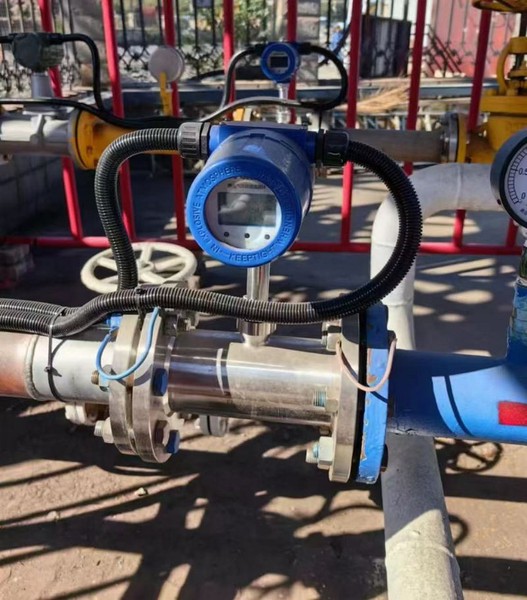
Electromagnetic flow meters are non-invasive flow measurement instruments that utilize the principle of Faraday's electromagnetic induction to determine the flow rate of fluids by measuring the charge carried by the liquid or gas flowing within a conductor. Electromagnetic flow meters have advantages such as a wide measurement range, high accuracy, and strong reliability, making them widely used in industrial production and laboratory experiments. They have significant applications in fields such as petrochemicals, water treatment, food processing, pharmaceuticals, and mining. Additionally, electromagnetic flow meters are suitable for scenarios involving tap water, beverages, chemicals, and wastewater treatment.
Level Meter
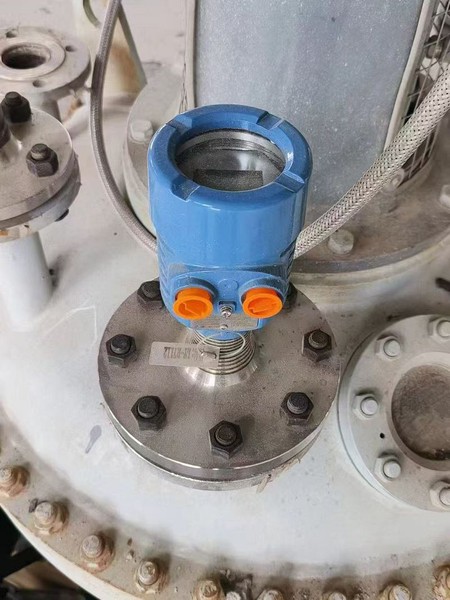
Radar level meters are widely used in several industries such as petrochemicals, food processing, pharmaceuticals, and water treatment, favored for their high accuracy and non-contact measurement features. Main application areas: Petrochemical industry: Radar level meters are widely used to monitor the liquid levels in crude oil tanks, finished oil tanks, and chemical raw material tanks. This is crucial for ensuring production safety and properly scheduling material transportation.
The working principle of radar level gauges is mainly based on the emission and reception of radar waves. The workflow is as follows:1. Emission of radar waves: The radar level gauge emits a narrow band of radar waves, usually microwave or millimeter wave, through an internal transmitter. These radar waves propagate through the air at the speed of light and reflect when they encounter the surface of a liquid or solid material.2. Reception of reflected signals: The receiver of the radar level gauge receives the radar wave signals that are reflected back from the surface of the liquid or material. The receiver records the time and intensity of the reflected signals.3. Calculation of liquid level height: By measuring the time interval from emission to reception, the radar level gauge can calculate the distance between the surface of the liquid or material and the sensor. Combining this with the installation position of the sensor and the known size of the liquid or material container, the height of the liquid level can be accurately calculated.
Pressure transmitter
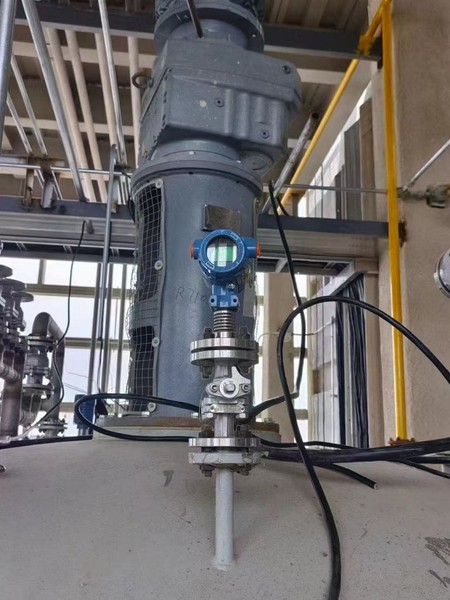
In practical applications, pressure transmitters play a crucial role in various industries such as water conservancy and hydropower, railway transportation, intelligent buildings, and petrochemicals. For example, in the petrochemical industry, pressure transmitters are used in conjunction with throttling devices to provide precise flow measurement and control; in the power industry, they are used in measurement environments that require high stability and high precision; while in the machinery and shipbuilding industries, pressure transmitters are used for stable measurements under strictly controlled conditions.
Temperature transmitter
The PT100 and PT1000 resistance temperature detection modules can be connected to a local RS-485 control network via an isolated 485 communication interface. A maximum of 32 PT100 and PT1000 resistance temperature detection modules can be connected on the same bus under RS-485; however, if a Link-Max RS-485 repeater is used, up to 256 PT100 and PT1000 modules can be connected to the same network, with a maximum communication distance of 1200m. Before installing the PT100 and PT1000 modules into the network, they should be configured first. The baud rate of the module should be set to match that of the network, and the PT100 and PT1000 modules should be assigned different addresses to prevent address conflicts.
