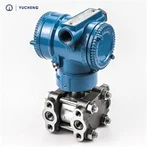
Common faults of pressure transmitters

1. During installation, the axial direction of the pressure sensitive part of the transmitter should be perpendicular to the gravity direction. If the installation conditions of the transmitter (Fig. 7) are limited, the transmitter should be installed and fixed, and then the zero position of the transmitter should be adjusted to the standard value.
2. The remaining pressure cannot be released, so the zero position of the sensor cannot be lowered. The best way to eliminate this reason is to remove the sensor and directly check if the zero position is normal. If it is normal, replace the sealing ring and try again.
3. The output of the pressurized transmitter does not change, but the output of the pressurized transmitter suddenly changes, and the zero position of the pressure relief transmitter cannot return. The reason for this phenomenon is most likely caused by the sealing ring of the pressure sensor.
4. Whether it meets the power supply requirements; Check for any wiring errors between the power supply, transmitter, and load equipment. If there is no voltage or polarity reversal on the transmitter wiring terminal, it can cause the transmitter to output no voltage signal.
5. The casing of pressure sensors and transmitters generally needs to be grounded, signal cables should not be mixed with power cables, and strong electromagnetic interference should be avoided around the sensors and transmitters. Sensors and transmitters should undergo periodic calibration in accordance with industry regulations when using transmitters (Figure 8).
6. When selecting pressure sensors and transmitters, users should fully understand the working conditions of the pressure measurement system and make reasonable choices according to needs to ensure that the system operates in the best state and reduce engineering costs.
7. Transfer the filling liquid to both sides of the measuring diaphragm through the isolation plate and the component. Measure the membrane and the electrodes on both sides of the insulation sheet to form a capacitor.
8. Pressure transmitters are required to be inspected once a week and once a month, mainly to remove dust from the instrument, carefully inspect electrical components, and frequently calibrate the output current value. The pressure transmitter is internally weak and must be isolated from external strong currents.