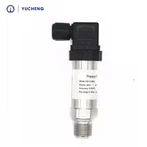
DIAPHRAGM PRESSURE GAUGE
A diaphragm pressure gauge, also known as a membrane pressure gauge, is a device that utilizes the deflection of a flexible thin membrane called the ‘diaphragm’ to measure the pressure of the fluid in a system. The membrane isolates the inner-working components of the pressure gauge from the media, preventing any contamination. This property makes the diaphragm pressure gauge suitable to use with corrosive or contaminated liquid or gaseous media.
This pressure gauge is utilized for low-pressure measurement and is used in applications such as measuring atmospheric pressure or monitoring pressure in a gas canister.

Working Principle
Diaphragm pressure gauges have a simple working mechanism, which can be seen in Figure 2. It consists of a thin circular membrane of a metal sheet called a diaphragm (B) which can be either flat or corrugated. When the pressure is applied, the deflection in the diaphragm should be linear. A flat diaphragm can ensure linearity only for small deflections. So, for industrial application, a corrugated diaphragm is preferred. The diaphragm can either be welded or clamped between the pair of flanges. The welded diaphragm is usually preferred in sanitary applications to prevent any potential for leakage.