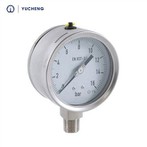
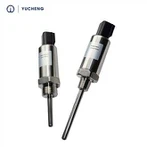
Four classifications of electric contact pressure gauges and wiring arrangement methods
The electric contact pressure gauge not only has the characteristics of fresh plan, reliable layout, complete varieties and specifications, good action stability, and strong compliance, but also has the advantages of good measurement and control, simple installation, and small maintenance. Therefore, it is the same as usual. The pressure measurement and control instrument with indication, no switching difference adjustment and no external setting device is incomparable to the pressure controller.

In order to satisfy the requirements of the tested tools (seismic resistance or corrosion resistance and explosion-proof requirements), you can choose the seismic electric contact pressure gauge or the corrosion resistance electric contact pressure gauge and the explosion-proof electric contact pressure gauge that meet the requirements.
Ordinary type: Suitable for measuring the pressure of gases and liquids that do not corrode copper alloys and iron.
Anti-corrosion type: Important pressure measuring components and instrument housing are made of stainless steel material plan, suitable for measuring the pressure of strong corrosive gases and liquids.
Vibration-resistant type: By filling the meter body with oil and using liquid damping to ensure vibration-free performance, it is practical for occasions where the medium is violently pulsating and the situation is shocked.
Explosion-proof type: Practically used in hazardous situations with explosive mixtures
Placement method
1 Axial belt front
2 Radial without edges
3 Radial with front edge
Contact parameter
Working voltage (maximum): 380VAC; 220VAC
Maximum working current: 1A
Continuous current; 0.6A
Maximum power: 30W
Working temperature of electric contact pressure gauge: -25℃——55℃
Working pressure upper limit: not more than 2/3 of the upper limit of the instrument
Working conditions, the vibration frequency is not more than 25Hz, and the amplitude is not more than 0.5mm