


1. Selection of pressure measuring points, the selected pressure measuring points can reflect the real situation of the measured pressure.
(1) It should be selected in the pipe section where the measured medium flows in a straight line, and should not be selected in the pipeline bend, bifurcation, dead angle or other places where vortices are easily formed.
(2) When measuring the pressure of the flowing medium, the pressure point should be perpendicular to the flow direction to avoid drilling burrs.
(3) When measuring the liquid pressure, the pressure point should be at the lower part of the pipeline, so that no gas is accumulated in the pressure guiding pipe. When measuring the gas, the pressure point should be above the pipe, so that no liquid is accumulated in the pressure guiding pipe.
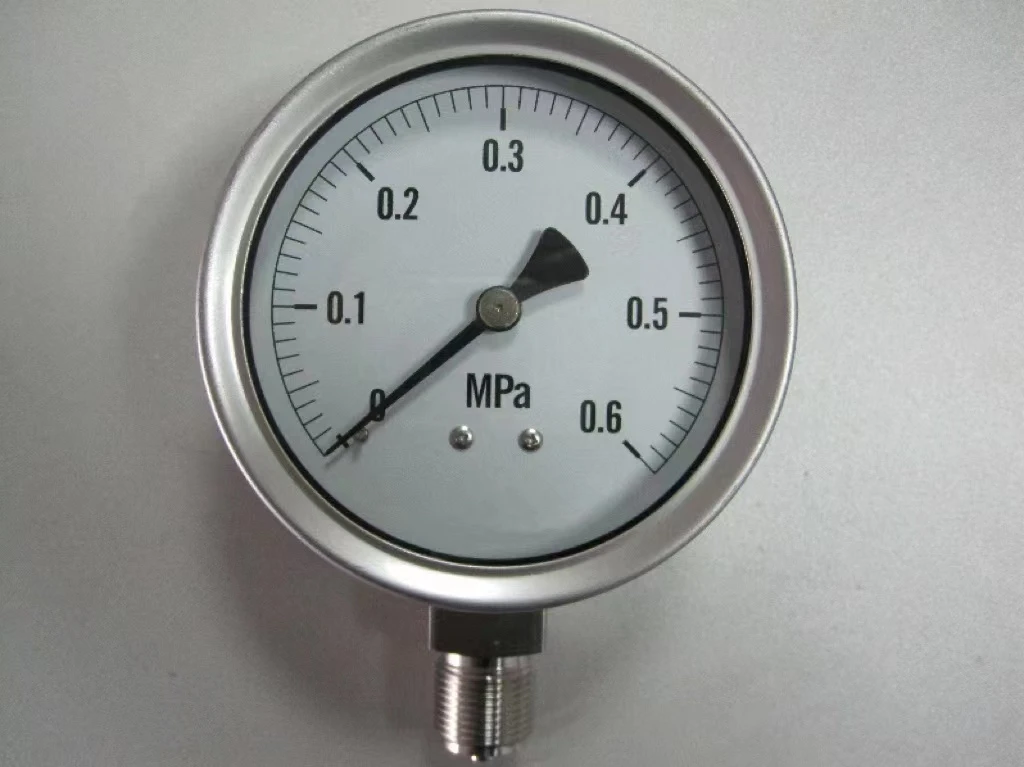
2. Laying of pressure guiding pipes
(1) The thickness of the pressure guiding tube is appropriate, generally the inner diameter is 6-10mm, and the length is 3-5m.
(2) When the measured medium is easy to condense or freeze, it is necessary to add thermal insulation and heat tracing lines.
(3) A shut-off valve should be installed between the pressure taking port and the pressure gauge, which should be close to the pressure taking port.
3. Installation of pressure gauge
(1) The pressure gauge should be installed in a place where it is easy to observe and repair.
(2) The installation site should try to avoid the influence of vibration and high temperature.
(3) When measuring the steam pressure, a condensate pipe should be installed to prevent the high-temperature steam from directly contacting the pressure measuring element; when there is a corrosive medium, an isolation tank filled with a neutral medium should be installed. In short, according to specific conditions (such as high temperature, low temperature, corrosion, crystallization, precipitation, viscous medium, etc.), take corresponding protective measures.
Gaskets should be installed at the connection of the pressure gauge. Generally, asbestos cardboard or aluminum sheets are used for pressures below 80°C and 2MPa, and annealed copper or lead gaskets are used when the temperature and pressure are higher (50MPa). In addition, the influence of the medium must be considered. For example, the pressure gauge for measuring oxygen cannot use a gasket with oil or organic compounds, otherwise it will cause an explosion. Do not use copper pads when measuring acetylene pressure.


